

Recommended Information

In vitro–differentiated Th1/Th17/Treg cells
Antibody-Dependent Cell-Mediated Cytotoxicity Assay (ADCC)
Antibody-dependent cellular phagocytosis
Complement-dependent cytotoxicity (CDC)
Cytokine Release Syndrome Risk Assessment (CRS)
Flow Cytometry-Based Cell Characterization Experiments (FACS)
Neutrophil Migration Assay
The phagocytosis of pathogens by neutrophils generally involves several steps: chemotaxis, opsonization, phagocytosis, and bactericidal activity. Under the influence of chemokines, neutrophils migrate directionally toward bacterial targets; bacteria that have been opsonized are readily adhered to the neutrophil surface, leading to invagination of the neutrophil plasma membrane. Through pinocytosis, the bacteria are engulfed, forming a phagosome, which subsequently fuses with lysosomes within the cell to form a phagolysosome, where the bacteria are ultimately killed.
The phagocytosis of pathogens by neutrophils generally involves several steps: chemotaxis, opsonization, phagocytosis, and bactericidal activity. Under the influence of chemokines, neutrophils migrate directionally toward bacterial targets; bacteria that have been opsonized are readily adhered to the neutrophil surface, leading to invagination of the neutrophil plasma membrane. Through pinocytosis, the bacteria are engulfed to form a phagosome, which subsequently fuses with lysosomes within the cell to form a phagolysosome, where the bacteria are ultimately killed.
Neutrophil migration chemotaxis assay: Under certain stimulatory conditions, neutrophils readily migrate in a chemotactic manner toward sites of pathology, such as areas of pathogen infection or allergen exposure. The accumulation of large numbers of neutrophils at these sites can lead to damage of the affected organ or tissue.
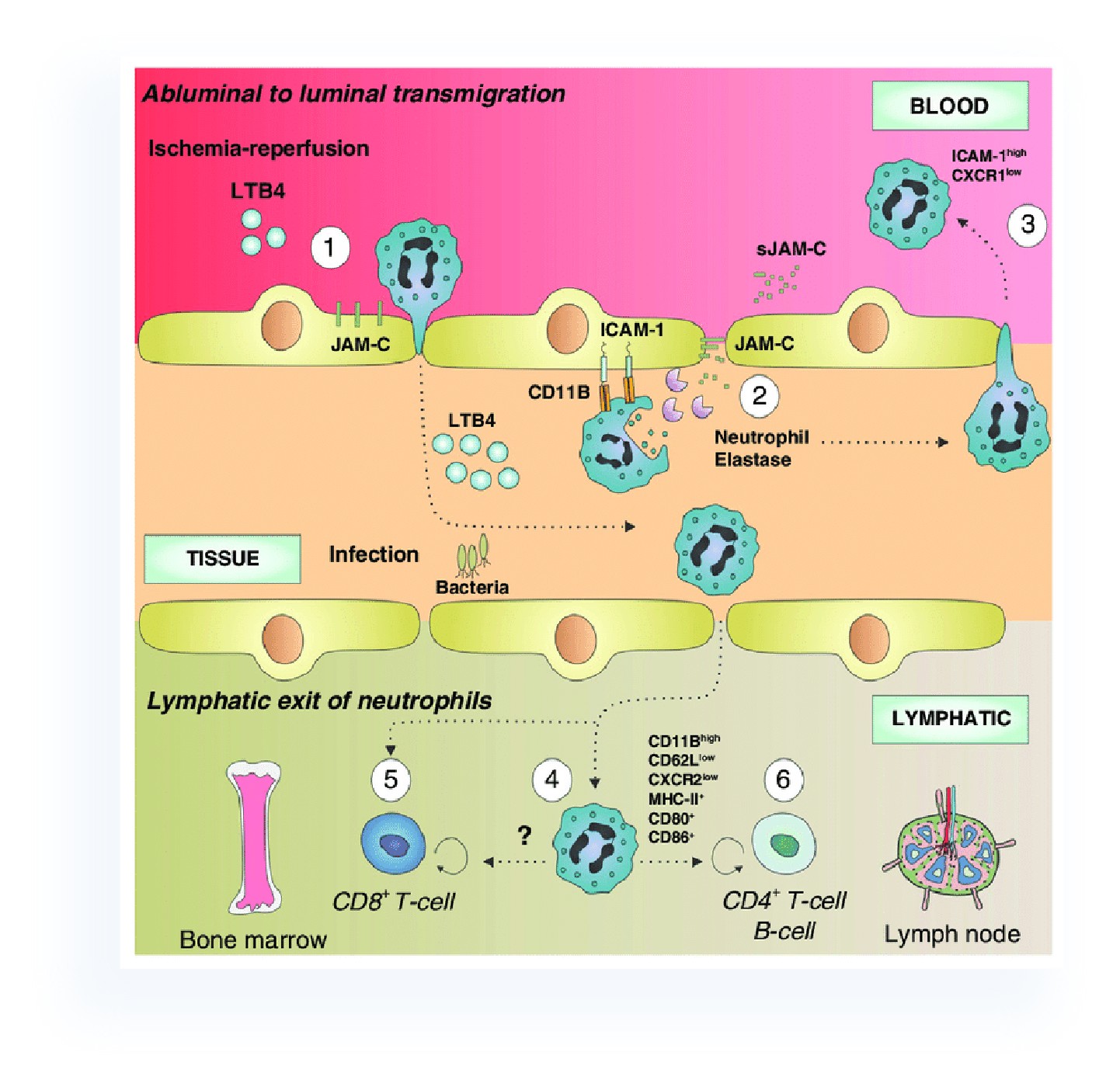
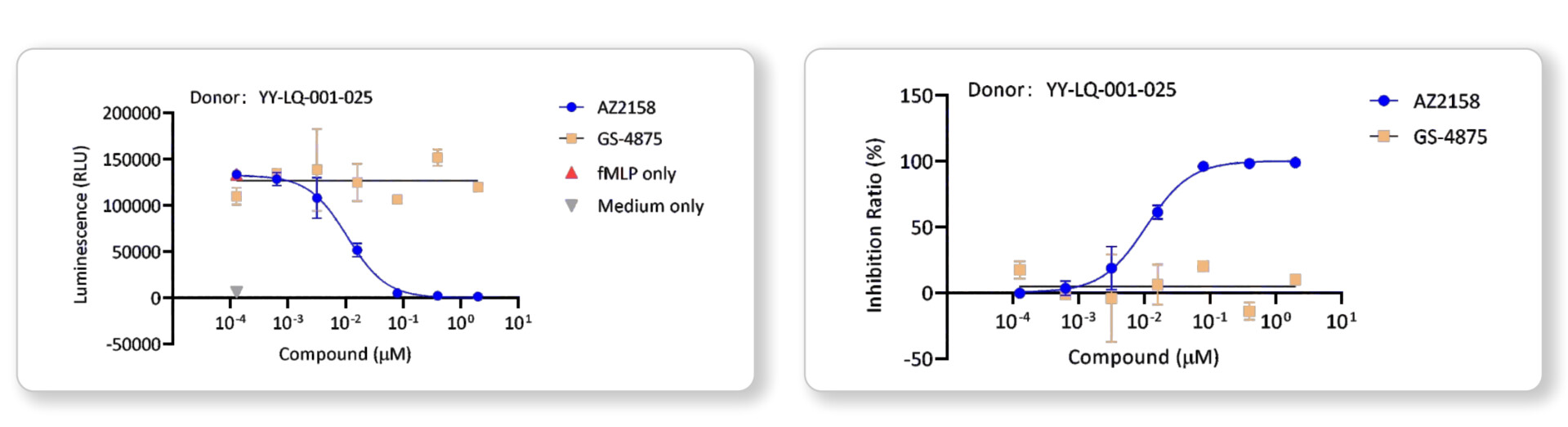
Using the Transwell assay, analyze the promoting or inhibitory effects of stimulants or inhibitors on neutrophil migration.
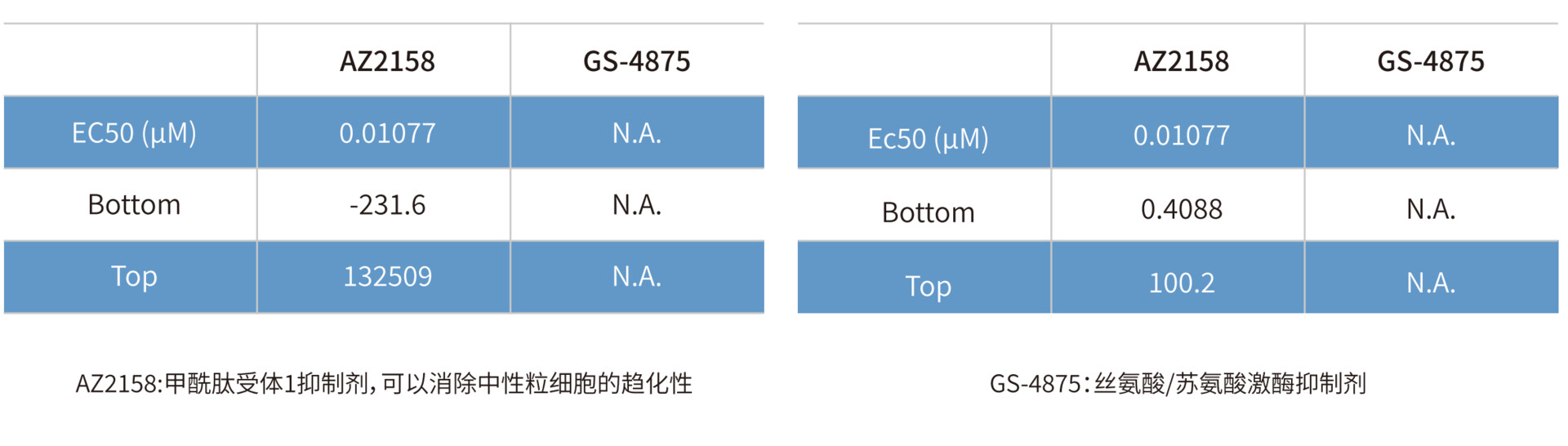
High concentrations of the inducer are cytotoxic, whereas low concentrations can dose-dependently stimulate neutrophil migration into the lower chamber; under appropriate inducer concentrations, both drugs markedly inhibit neutrophil migration into the lower chamber.
Keyword
Previous page:
:Next page
Previous page:
Next page: